


Latest resources, sent to your inbox weekly
D-Dimer
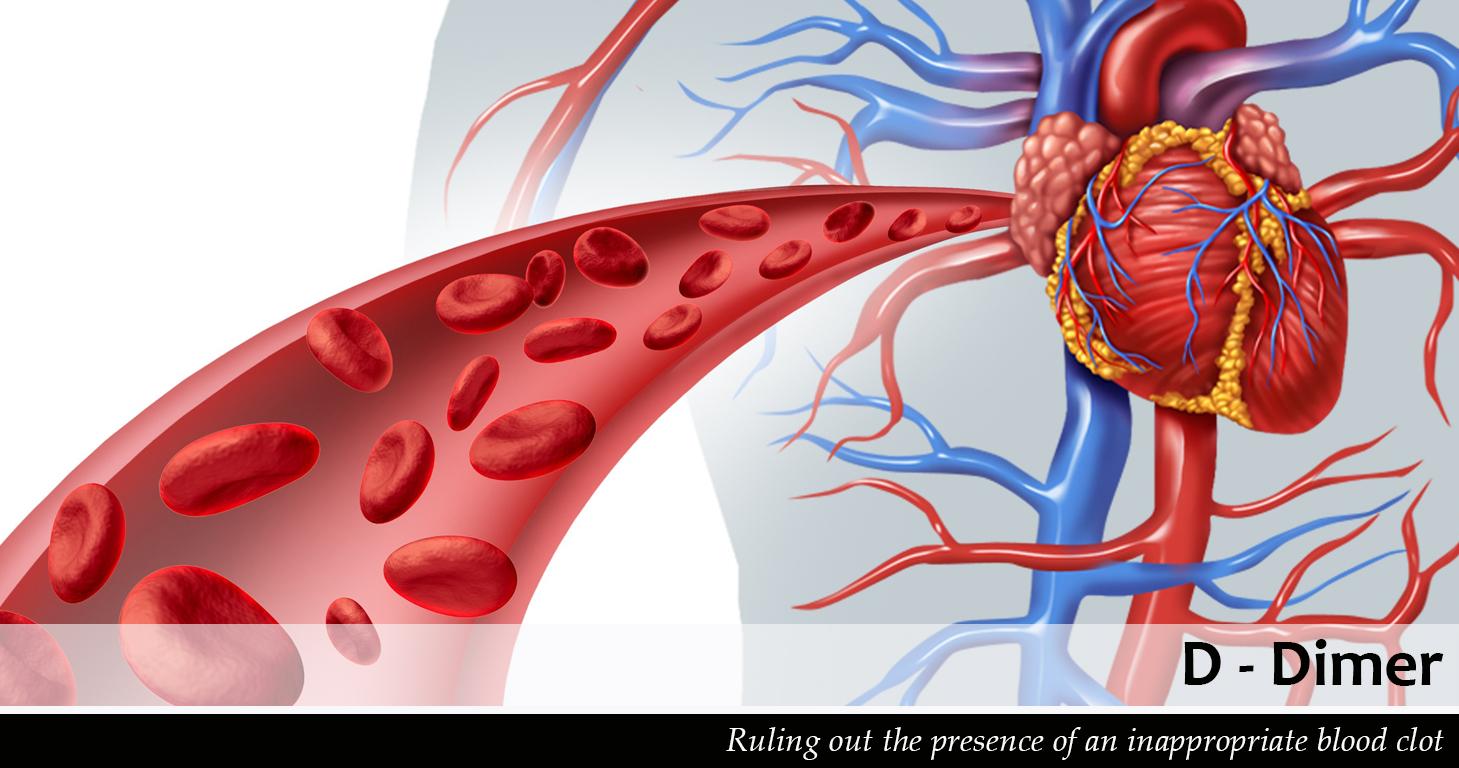
D-dimer is a fibrin degradation product (or FDP), a small protein fragment present in the blood after a blood clot is degraded by fibrinolysis. It is so named because it contains two cross linked D fragments of the fibrin protein.

Fibrin degradation products (FDPs) are formed whenever fibrin is degraded by enzymes (e.g.,
plasmin). There are four principle fibrin degradation products called X, Y, D, and E that are
liberated in various combinations. When a fibrin clot is broken down by plasmin, the last
fragment to be degraded is one consisting of two D and one E subunits. This is split, releasing
the E fragment and two D fragments that are covalently linked together. This fragment is
called D-dimer, and it is produced from fibrin but not from fibrinogen degradation. High
levels of FDP will indicate increased fibrinolysis.

D-dimer tests are ordered, along with other laboratory tests and imaging scans, to help rule
out the presence of a thrombus. Some of the conditions that the d-dimer test is used to help
rule out include:
- Deep Vein Thrombosis (DVT)
- Pulmonary Embolism (PE)
- Strokes

D-dimer may be ordered when someone has symptoms of DVT, such as:
- Leg pain or tenderness, usually in one leg
- Leg swelling, edema
- Discoloration of the leg

• Sudden shortness of breath, labored breathing
• Coughing, hemoptysis (blood present in sputum)
• Lung-related chest pain
• Rapid heart rate

For more information, you may download our newsletter below.
useful_links
accreditations


Micro Health Laboratories and the associated logo are the registered trademarks of Micro Health Laboratories. All third party marks and logos are the property of their respective owners | Designed & Developed By Xynosoft Solutions

Let’s walk this path to healthier living together.
